

Research


The State Key Laboratory of Subtropical Building and Urban Science originated from the State Key Laboratory of Subtropical Building Science. Its history dates back to 1978, when the state approved the establishment of the Subtropical Building Research Laboratory of the Ministry of Education at our university. In 2005, The Key Laboratory of Subtropical Building Science of the Ministry of Education was founded. In early 2007, it was further approved by the Ministry of Science and Technology to be expanded into the State Key Laboratory of Subtropical Building Science, centering on the two first-level disciplines of Architecture and Civil Engineering and integrating Acoustics, Optics, Transportation, Environmental Science and Engineering, Material Science, Information Technology, Urban Sociology, and other disciplines. In September, 2007, the feasibility of the construction plan was confirmed and the construction project initiated officially in November. Then, it passed the acceptance inspection in June, 2010 and passed the assessments of the Ministry of Science and Technology in 2013 and 2018, respectively. In April, 2023, it was reconstructed based on South China University of Technology and Shenzhen University, and renamed.
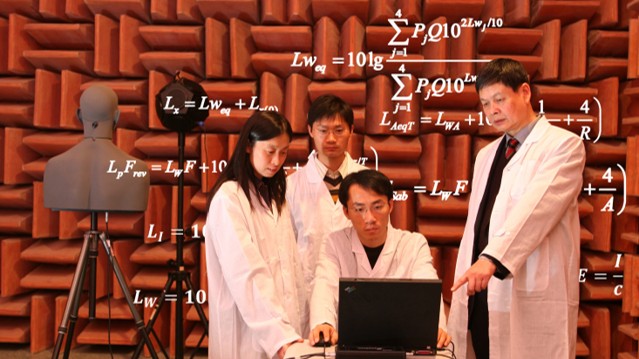
The Laboratory focuses on major national strategic needs, particularly those related to the high-quality development of the Guangdong-Hong Kong-Macao Greater Bay Area. Centering on major scientific and technological issues such as the theories and technologies for the intelligent transformation, carbon reduction, and resilience enhancement of subtropical buildings and cities, the Laboratory is devoted to some key research tasks, such as coordinated development and climate adaptation of the Greater Bay Area, green building design and cultural inheritance, low-carbon structural construction and resilience improvement, and urban intelligent perception and digital drive. Key attention is also paid to overcoming critical scientific issues, including the life-cycle evolution patterns of high-density cities and the theory of multi-objective coordinated planning, the renewal and performance improvement mechanism of new and old engineering systems, the mechanism of epidemic emergency control and the theory of urban sustainable development, the multi-scale coupling impact mechanism of climate, buildings, structures, cities and humans, the law of multi-sensory interaction between humans and multiple environmental factors (acoustics, optics, and thermals) in buildings, the multi-objective coordination mechanism for structural climate adaptation, green construction and recycling, the full-chain coupling mechanism of multi-hazard chain transmission, resilience coupling, and functional restoration in cities, and the theory of minimal intervention for heritage protection.
The Laboratory currently has 202 permanent research staff, including 2 academicians of the Chinese Academy of Sciences, 4 academicians of the Chinese Academy of Engineering, 2 foreign academicians, 3 Changjiang (Yangtze River) Scholars, 6 winners of the National Science Fund for Distinguished Young Scholars, 3 National Masters of Engineering Survey and Design, 1 young top talent of the “Ten Thousand Talents Program”, and 11 winners of the National Science Fund for Excellent Young Scholars (including 7 overseas winners).
The Laboratory strives to establish a world-class research platform for intelligent transformation, carbon reduction, and resilience enhancement of subtropical buildings and cities in the next 5-10 years, aiming to make irreplaceable and remarkable contributions to the high-quality construction and sustainable development of a world-class urban agglomeration in the Guangdong-Hong Kong-Macao Greater Bay Area.
Website: https://www2.scut.edu.cn/sklsbs/

381 Wushan Road, Tianhe District, Guangzhou, 510641

Guangzhou Higher Education Mega Centre, Panyu District, Guangzhou, 510006

777 Xingye Avenue East, Panyu District, Guangzhou, 511442

+86-20-81182580
sieinfo@scut.edu.cn
© 2025 South China University of Technology. All Rights Reserved. 粤ICP备05084312号