

Research


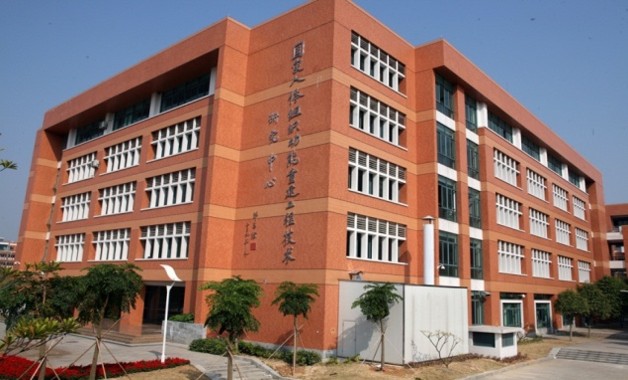
The National Engineering Research Center for Tissue Restoration and Reconstruction was approved by the Ministry of Science and Technology of China in 2009. It functions as a national platform for scientific innovation and the translation of engineering technologies in the fields of advanced biomaterials and high-end medical devices. In 2015, the Ministry of Science and Technology approved the establishment of the Hong Kong Branch Center, making the center a key base for implementing the science and technology development strategy of the Guangdong-Hong Kong-Macao Greater Bay Area.
The center conducts basic and translational research on advanced biomaterials, tissue engineering and regenerative medicine, medical imaging and diagnosis, biomedicine, intelligent medical devices and regulatory science, as well as medical device evaluation to advance high-quality development of medical devices.
The center has assembled a premier R&D and innovation team led by esteemed scientists, including Academicians, Changjiang (Yangtze River) Scholars, and Distinguished Young Scholars. With laboratory space spanning 36,000 square meters and equipment valued at 240 million RMB, the center has undertaken over 600 national research projects, including the former 973 and 863 Programs, the National Key R&D Programs of China, major projects funded by the National Natural Science Foundation of China (NSFC), as well as at the provincial and ministerial levels. This research has yielded a series of significant scientific achievements, recognized with prestigious honors including the National Natural Science Award, the National Technology Invention Award, the China Patent Award, the National Teaching Achievement Award, and the Guangdong Province Outstanding Contribution Award.
Through an open, diverse, dynamic, and efficient collaborative innovation model, the center has achieved numerous technological breakthroughs. Key examples include precision bone repair medical devices using 3D printing technology and comprehensive technologies for the precise treatment of bone defects. Collectively, these achievements have successfully addressed global challenges in the regeneration and repair of large bone defects.
So far, the center has successfully translated a series of technologies into medical products, has led or contributed to the establishment of 58 evaluation standards, and assisted partner companies in obtaining 28 national medical device registration certificates (including 10 Class III certificates) and 4 EU CE markings. These products have been clinically adopted in thousands of hospitals in China, the EU, and elsewhere, benefiting over 300,000 patients. These achievements have yielded social and economic benefits, substantially promoting the development of the biomaterial and medical device industries in China.
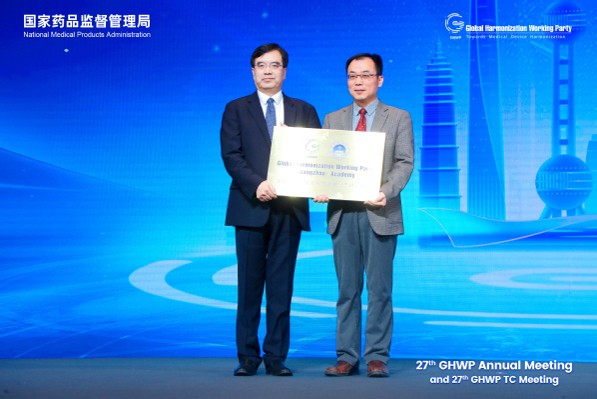
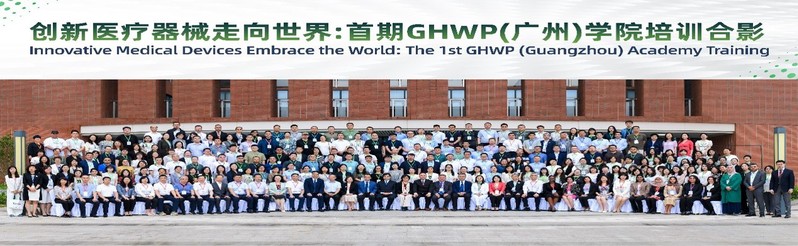
The center hosts multiple innovation and industrialization platforms, including the Research Base for Medical Devices Regulatory Science of the National Medical Products Administration (NMPA), the Key Laboratory for Research and Evaluation of Innovative Biomaterials and Medical Devices of NMPA, and the Medical Device Research and Testing Center. It is also home to the only national demonstration base for the technology translation of biomaterials and medical devices, the Guangdong Institute of Advanced Biomaterials and Medical Devices, and the world’s first Global Harmonization Working Party (GHWP, Guangzhou) Academy.
The center has established a collaborative mechanism that integrates Government, Industry, Academia, Research, Medicine, Evaluation, and Regulation. This integrated approach connects the entire value chain-from technological innovation and scientific regulation to international collaboration and industrial services. The ultimate goals are to advance cutting-edge research and translation in high-end medical devices, strengthen regulatory science and global regulatory harmonization (e.g., through GHWP), promote innovative products for global public health, and lead in supporting the development of China's medical device industry.

381 Wushan Road, Tianhe District, Guangzhou, 510641

Guangzhou Higher Education Mega Centre, Panyu District, Guangzhou, 510006

777 Xingye Avenue East, Panyu District, Guangzhou, 511442

+86-20-81182580
sieinfo@scut.edu.cn
© 2025 South China University of Technology. All Rights Reserved. 粤ICP备05084312号